
Spinal injuries are life‑changing events that affect mobility, continence, respiratory stability, skin integrity, and overall independence. Individuals living with tetraplegia, paraplegia, degenerative spinal conditions, or post‑surgical spinal trauma often require structured, clinically governed home‑care packages to remain safe and stable at home.
Revive Rise provides specialist spinal injury home care across Birmingham and the wider West Midlands, delivering nurse‑led support designed to prevent complications, promote independence, and ensure high‑quality daily living.
Understanding Spinal Injuries
Spinal injuries vary in severity and presentation, but commonly include:
- Tetraplegia / Quadriplegia
- Paraplegia
- Incomplete spinal cord injuries
- Degenerative spinal conditions
- Post‑operative spinal trauma
- Spinal instability following accidents or falls
These conditions often impact:
- Mobility and transfers
- Bladder and bowel function
- Respiratory stability
- Skin integrity and pressure‑area risk
- Autonomic function
- Pain and spasm management
Because of these risks, spinal injury clients benefit from high‑acuity home care with nurse oversight.
Why Specialist Home Care Is Essential for Spinal Injury Clients in Birmingham
1. Preventing Life‑Threatening Complications
Spinal injury clients are at risk of:
- Autonomic dysreflexia (AD)
- Pressure ulcers
- Respiratory deterioration
- Urinary tract infections
- Constipation and bowel obstruction
- Postural hypotension
Nurse‑led governance ensures early recognition and rapid escalation.
2. Maintaining Independence at Home
Home‑based spinal injury care supports:
- Safe mobility and transfers
- Daily living routines
- Rehabilitation exercises
- Emotional stability
- Community engagement
Clients remain in familiar surroundings while receiving structured support.
3. Reducing Hospital Admissions
With proper monitoring and intervention, home care can significantly reduce:
- Emergency admissions
- Pressure‑area complications
- Infection‑related deterioration
- Respiratory crises
This improves long‑term outcomes and quality of life.
Spinal Injury Home‑Care Services in Birmingham
Clinical & Complex Care
- Autonomic dysreflexia (AD) monitoring
- Respiratory observations
- Catheter care & bladder management
- Bowel routines
- Pain and spasm management
- Medication administration
- Post‑operative spinal care
Mobility & Transfer Support
- Hoisting and safe transfers
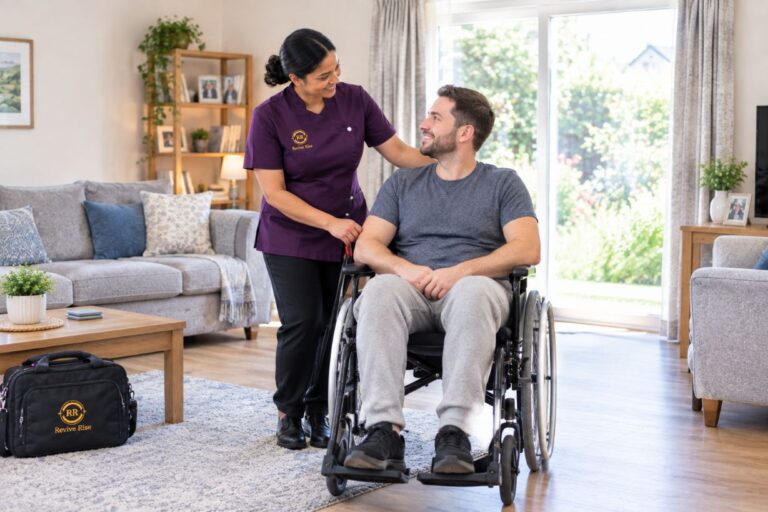
- Wheelchair mobility
- Positioning and posture management
- Assistance with physiotherapy routines
Skin Integrity & Pressure‑Area Care
- Repositioning schedules
- Pressure‑relief equipment use
- Wound care
- Early detection of skin changes
Daily Living & Independence
- Personal care
- Meal preparation
- Community access
- Social and emotional support
- Rehabilitation‑focused routines