01 / 06
Personal care and dignity
Assistance with washing, dressing, toileting and daily routines in a way that honours the person's preferences.


Adjusting to life after limb loss can involve new routines, changing mobility and emotional challenges. Revive Rise explores personalised, nurse-led home care that respects independence, dignity and each person's rehabilitation goals.
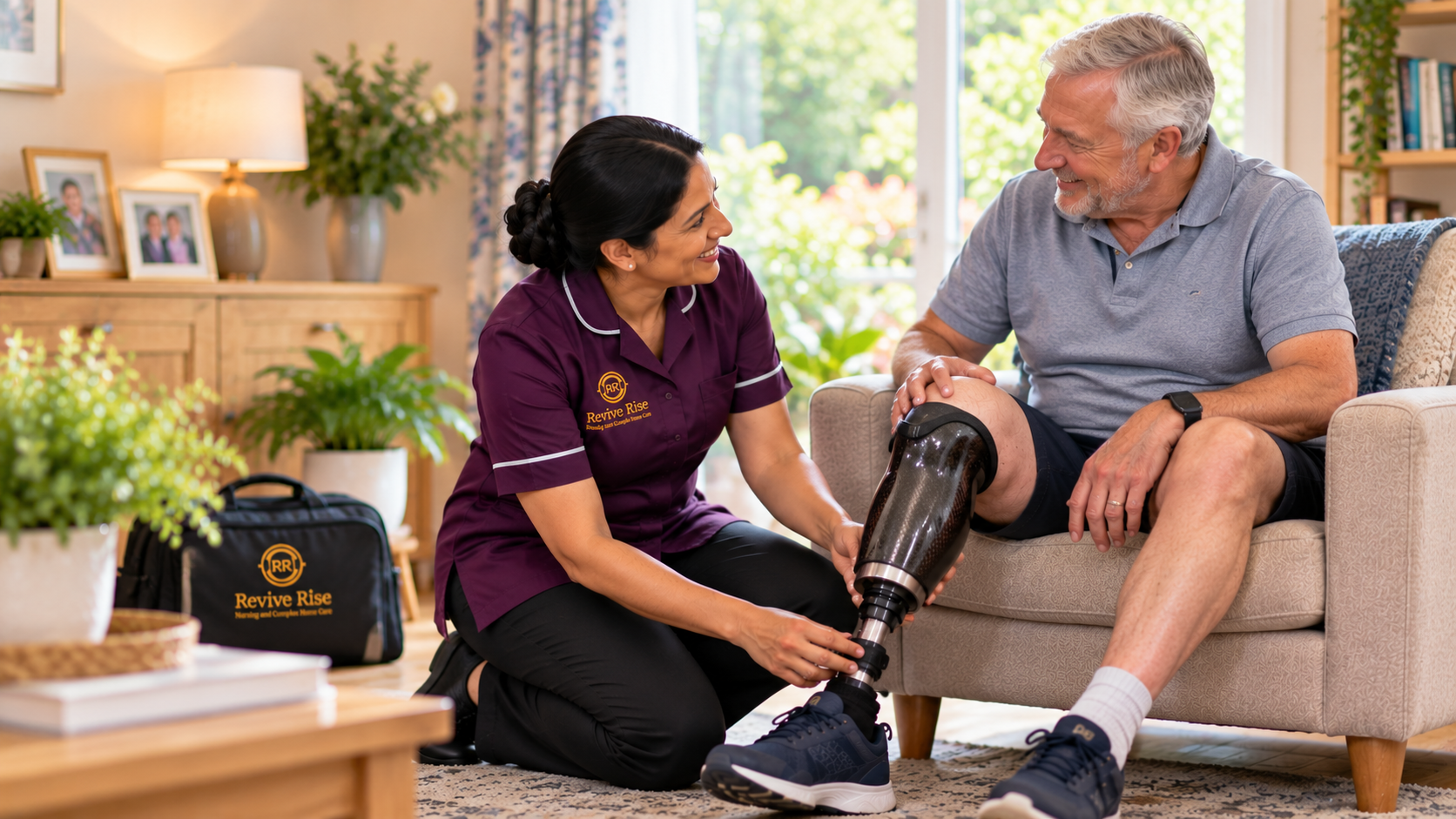
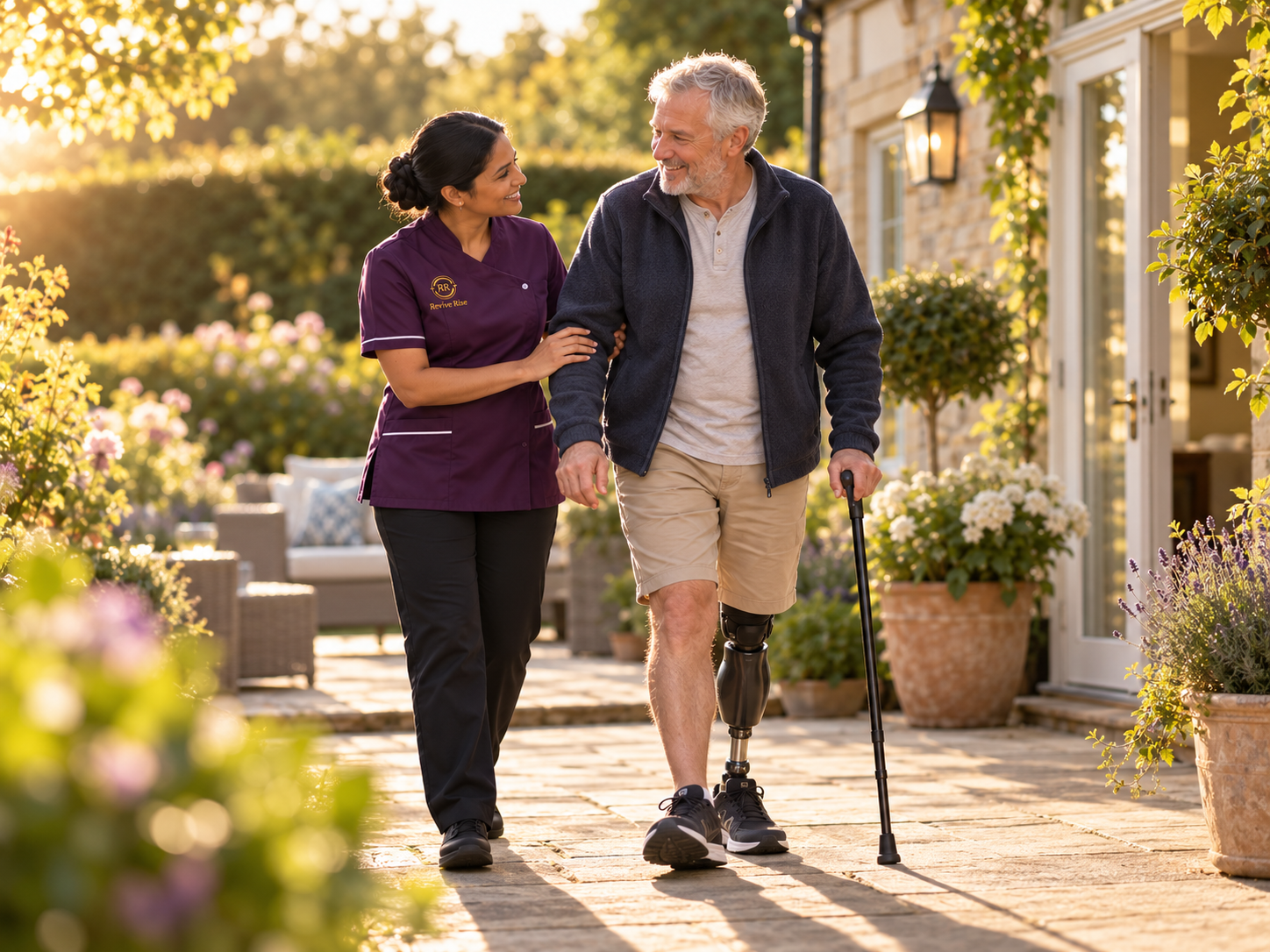
People experience amputation differently. Some are adjusting after surgery while others have lived with limb loss for years. Support needs may be short-term, longer-term or change as recovery, mobility and equipment requirements evolve.
For independent guidance, see NHS: Amputation and recovery and NICE: Rehabilitation after traumatic injury. Home care does not replace urgent assessment or specialist treatment.
Our care approach begins with listening: how does the person want to live, what has their clinical team advised and which tasks would genuinely benefit from support? We consider safe home routines alongside emotional wellbeing and the person's right to choose how much help they receive.
Revive Rise does not provide prosthetic prescription, fitting or specialist physiotherapy. Prosthetists, rehabilitation clinicians and treating teams lead those decisions. Any dressing, wound or other clinical task must be expressly assessed, indicated and completed only by appropriately competent staff.
After limb loss, the type and duration of support depend on the person's abilities, goals and existing rehabilitation plan. Care can be reviewed as routines and mobility change.
Assistance with washing, dressing, toileting and daily routines in a way that honours the person's preferences.
Help with agreed moving and handling, wheelchair routines and transfers using suitable assessed equipment and clinician guidance.
Observing and reporting concerns involving residual-limb skin, pressure areas or the remaining limb, according to the care plan.
Where appropriate and assessed, competent staff may assist with prescribed medicines and specified clinical-care activities.
Support with meals, activities, energy pacing and daily structure without taking over tasks the person wishes to do themselves.
Continuity of carers, respectful listening and communication with relevant specialist support services when requested.
Life after an amputation can bring practical changes as well as an emotional adjustment. Care should respect each person's preferences—whether they use a wheelchair, walking aids, a prosthesis or other equipment.
The home care team supports assessed daily activities. Prosthetic fitting, specialist therapy and treatment decisions remain with the appropriate rehabilitation and medical professionals.
Everyone's experience of limb loss differs. We begin with the person's priorities, review rehabilitation guidance and agree only those care tasks we can safely support.
Discuss your usual routines, preferences and current support.
We consider home safety, health needs and rehabilitation guidance.
We clarify tasks, staffing, competencies and communication arrangements.
Plans can be reassessed as ability, equipment or priorities change.
Revive Rise discusses amputation-related home care enquiries across Staffordshire and the West Midlands, subject to individual needs, appropriately trained care staff and postcode coverage.
We can talk through daily care needs, discharge arrangements and practical support that protects dignity, independence and choice.