01 / 06
Personal care with injury restrictions
Support for washing, dressing and daily routines while respecting splints, braces, movement limits and individual preferences.


When several serious injuries affect movement, health and everyday life, getting home is only part of the journey. Revive Rise explores personalised, nurse-led care arrangements to support people with complex needs after traumatic injury.
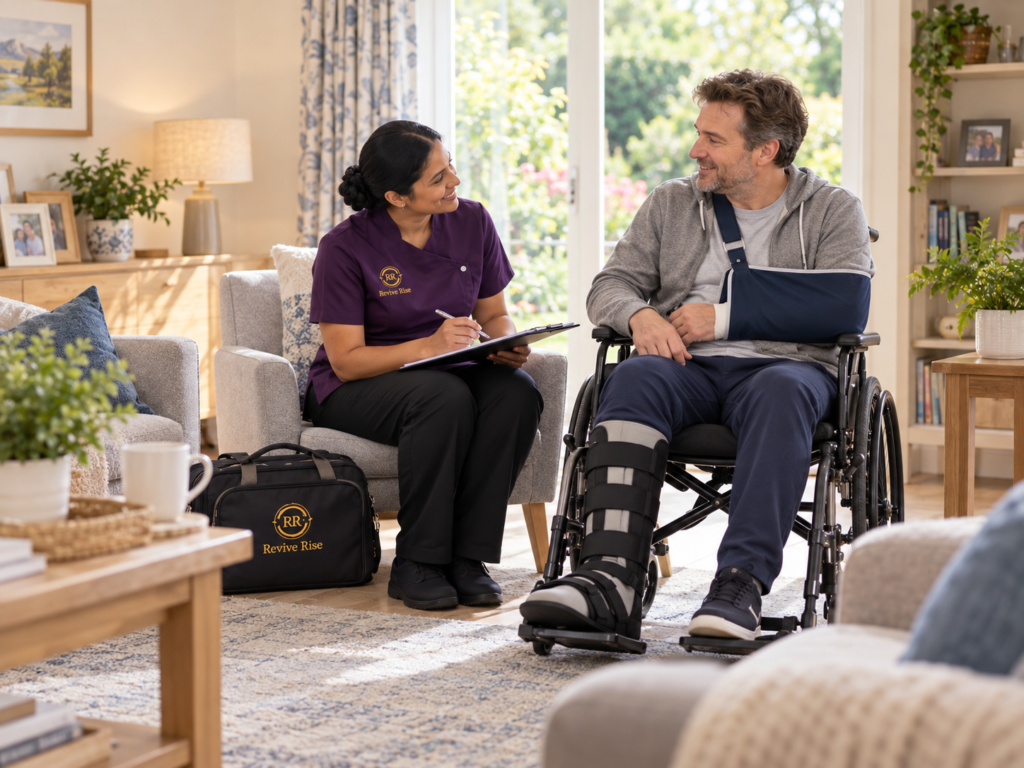
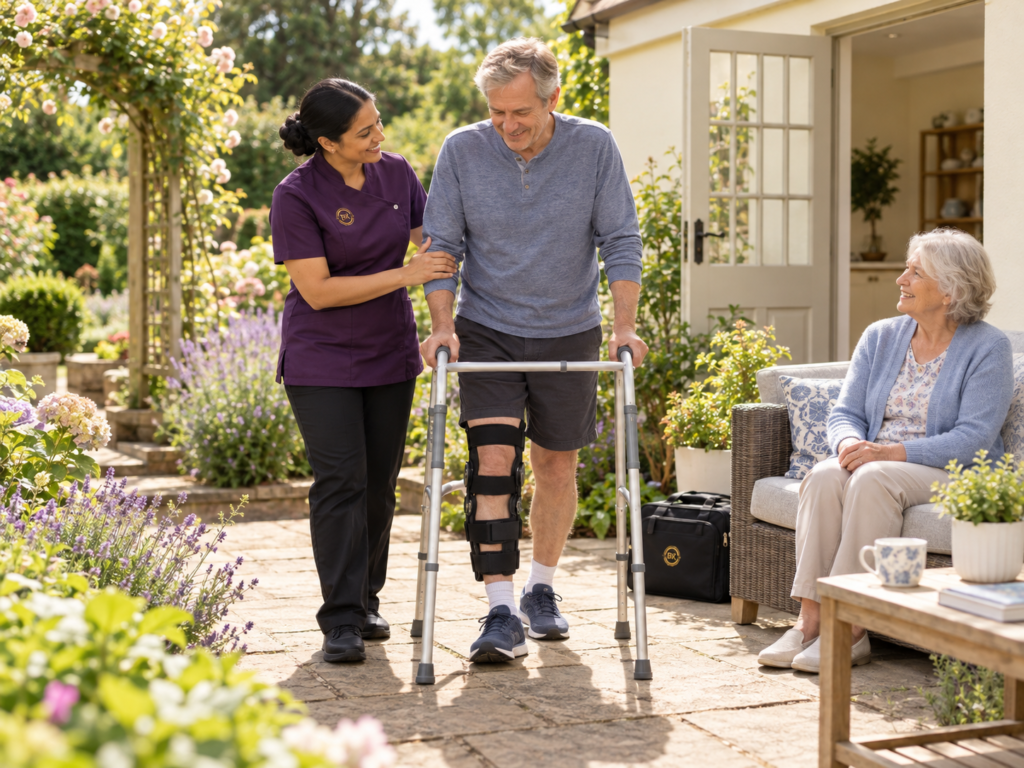
Polytrauma can involve several injuries at once, including fractures, soft-tissue injuries and other complications. Some people need practical help for a short recovery period, while others require longer-term support with multiple care needs.
For independent guidance, see NICE: Rehabilitation after traumatic injury and NHS: Recovery after surgery. Home care does not replace urgent assessment or specialist treatment.
Our role is to build the home-care part of a wider plan around the person's goals, hospital discharge instructions, prescribed restrictions and established rehabilitation programme. We discuss the level of support required before deciding whether suitable staff can be provided.
Revive Rise does not replace orthopaedic surgeons, physiotherapists or specialist rehabilitation teams. Weight-bearing restrictions, exercise prescriptions, medication changes and medical treatment remain directed by the appropriate clinicians. Nursing tasks are accepted only after competency and service-scope checks.
Following serious injury, a suitable home care arrangement may combine personal assistance, nurse-led oversight and practical support alongside the treating team's instructions.
Support for washing, dressing and daily routines while respecting splints, braces, movement limits and individual preferences.
Assistance with repositioning, wheelchair routines and moving and handling according to agreed assessments and equipment guidance.
Care staff can record and report changes such as skin concerns, pain-related difficulties or unexpected deterioration through the agreed escalation pathway.
Support with medicines and nursing activities where commissioned, assessed and within each professional's competency.
Practical assistance with food, hydration, daily structure, rest and energy conservation to help reduce avoidable strain.
With permission, we can work alongside hospital discharge teams, occupational therapists, physiotherapists and case managers.
Living with several injuries can mean changing restrictions, discomfort, fatigue and a new reliance on others. Home support should be responsive to what someone can do now and what their care professionals have advised.
We work within the agreed medical and rehabilitation plan. Specialist orthopaedic treatment, weight-bearing guidance and therapy are led by the relevant clinicians rather than replaced by domiciliary care.
Care begins with understanding the injuries, current clinical guidance and what matters most to the individual. A suitable package is confirmed only after assessment.
Tell us about the injuries, discharge plans and expected support.
We review practical care needs, risks, equipment and competencies.
We clarify staffing, responsibilities and escalation before the package starts.
We review the arrangement when needs or clinical instructions change.
Revive Rise welcomes enquiries about polytrauma and complex orthopaedic care in Staffordshire and the wider West Midlands. We discuss the exact postcode, care needs and suitably skilled staffing before confirming availability.
Whether someone is approaching hospital discharge or needs an existing package reviewed, our care team can discuss appropriate practical and nursing support, without obligation.