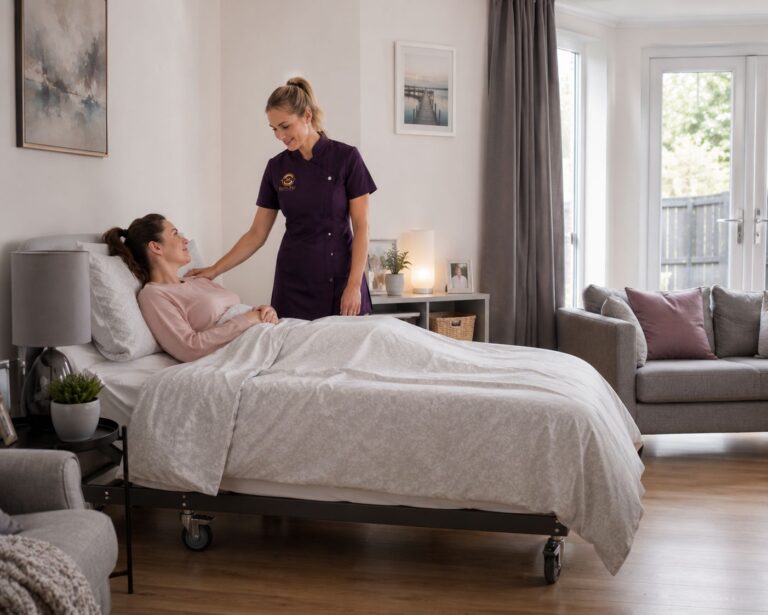

Choosing the right healthcare support for a loved one can be difficult, particularly when they have ongoing or specialist medical needs. Families searching for Complex Care Tamworth may come across terms such as nursing care, domiciliary care, specialist care, and nurse-led home care. Although these services can overlap, they are not always the same.
Understanding the difference can help families identify the level of support that best matches an individual’s health needs, daily routine, and personal goals. Professional care at home can allow people to remain in familiar surroundings while receiving appropriate assistance.
This guide explains the differences between complex care and nursing care and what families in Tamworth should consider when choosing professional support.
What Is Complex Care at Home in Tamworth?
Complex care at home is specialist support for people whose health needs are more involved than standard personal or domiciliary care.
A person may require complex care due to a serious injury, neurological condition, disability, long-term illness, or medical treatment requiring specialist knowledge and ongoing monitoring.
Complex care can involve several aspects of support, including:
- Tracheostomy care
- Ventilator support
- Enteral tube feeding
- Catheter and stoma care
- IV therapy
- Spinal injury support
- Acquired brain injury care
- Complex end-of-life care
- Support with multiple long-term conditions
The exact care package depends on the individual’s assessed needs. Complex care is therefore not defined simply by a diagnosis. It is about the level, combination, and clinical nature of support a person requires.
Specialist NHS services also recognise complex care at home as a way of providing personalised support to people with multiple or complex needs while helping them maintain independence.
What Is Home Nursing Care in Tamworth?
Nursing care at home involves care delivered or clinically overseen by qualified nurses to address healthcare needs within a person’s own home.
Nursing care may be appropriate when someone needs professional clinical intervention, monitoring, medication support, wound care, symptom management, or assistance following illness or treatment.
Nursing care at home may support people with:
- Long-term health conditions
- Recovery following illness or surgery
- Medication requirements
- Wound management
- Continence needs
- Palliative or end-of-life needs
- Clinical monitoring
- Rehabilitation requirements
The NHS explains that community nurses can provide nursing care within a person’s home and may work alongside specialist professionals when additional expertise is required.
Complex Care vs Nursing Care: What Is the Difference?
The terms complex care and nursing care are sometimes used interchangeably, but they describe different aspects of healthcare support.
Nursing care generally refers to care involving qualified nursing knowledge and clinical skills.
Complex care generally refers to a broader package of support for individuals whose needs may involve multiple conditions, specialist equipment, advanced clinical interventions, or continuous supervision.
For example, someone recovering from surgery may need nursing care at home for wound management and medication support. Another person living with a spinal injury and requiring catheter management, mobility assistance, medication, and specialist equipment may require a more comprehensive complex care package.
The appropriate service should therefore be determined through an individual assessment rather than by choosing a care label alone.
Who May Need Complex Care in Tamworth?
Complex care may be suitable for individuals whose healthcare needs require a coordinated and highly personalised approach.
People Living With Neurological Conditions
Conditions affecting the brain, spinal cord, or nervous system can create multiple care requirements. An individual may need assistance with mobility, communication, nutrition, medication, personal care, or specialist clinical interventions.
People With Spinal or Acquired Brain Injuries
Individuals recovering from spinal cord or acquired brain injuries may require ongoing assistance with daily activities alongside specialist healthcare support.
People Requiring Respiratory Support
Individuals who depend on ventilators or have a tracheostomy may require carers with specialist training and appropriate clinical oversight.
People With Multiple Healthcare Needs
A person may have several conditions or care requirements that interact with one another. A coordinated care plan can help ensure that their support remains consistent and responsive.
When Is Nursing Care at Home More Appropriate?
Not everyone who needs professional healthcare requires a complex care package.
Nursing care at home may be suitable when a person’s needs are primarily clinical but do not require the broader level of support associated with complex care.
Examples can include:
- Post-hospital nursing support
- Medication management
- Wound care
- Continence support
- Symptom monitoring
- Palliative care
- Support with specific clinical procedures
The NHS also notes that care can be delivered at home in a range of circumstances, helping people remain in familiar surroundings where appropriate.
What Are the Benefits of Complex Care at Home in Tamworth?
For people with significant healthcare needs, receiving complex care at home can provide several important benefits.
Familiar Surroundings
Remaining at home can help individuals maintain familiar routines and stay close to family members.
Personalised Care Support
Care can be built around the person’s medical needs, preferences, lifestyle, and goals rather than following a standard routine.
Greater Continuity
A structured care package can provide consistency between carers, nurses, family members, and other healthcare professionals.
Support for Independence
Professional support does not necessarily mean taking away independence. The goal can be to help individuals participate in daily activities and make choices wherever possible.
Family Reassurance
Families may feel more confident knowing that their loved one’s care is being delivered through an organised and professionally managed care plan.
Why Nurse-Led Care Matters for Complex Care in Tamworth
Complex healthcare needs can change over time. A person may require adjustments to their care plan as their condition, medication, mobility, or treatment needs change.
A nurse-led approach can provide valuable clinical oversight. Registered nurses can assess needs, contribute to care planning, monitor changes, and support carers with appropriate clinical guidance.
At Revive Rise, care is nurse-led, with NMC-registered nurses providing clinical oversight and supporting carers in the delivery of personalised home care. The provider describes its approach as clinically governed, risk-managed, and focused on person-centred care.
This approach can be particularly valuable when a person has advanced healthcare requirements that need more than routine domiciliary support.
How to Choose Complex Care Services in Tamworth
Families should look beyond the name of a care service and consider how the provider will actually manage their loved one’s needs.
Check Professional Qualifications
Ask whether nurses are appropriately registered and whether carers have relevant training for the specific needs involved.
Check CQC Registration
The Care Quality Commission is the independent regulator of health and social care in England. Its website provides information about regulated services and inspection reports, including homecare agencies.
Families can use the CQC’s information to help compare providers and understand how services are regulated.
Ask About Clinical Oversight
For complex care, it is important to understand who assesses the person’s needs, creates the care plan, reviews it, and responds when their condition changes.
Discuss the Individual’s Full Needs
A good assessment should consider more than medical diagnosis. It should look at:
- Personal care
- Mobility
- Communication
- Nutrition
- Medication
- Clinical interventions
- Emotional wellbeing
- Family involvement
- Personal preferences
Consider Future Care Needs
Healthcare needs can change. Ask whether the provider can adapt the care package if additional support becomes necessary.
Can Complex Care Be Provided Alongside Domiciliary Care?
Yes. Complex care and domiciliary care can form part of the same personalised care package.
For example, an individual may need help with washing, dressing, meals, and household routines while also requiring specialist clinical support. A coordinated care plan can bring these different requirements together.
This is why an individual assessment is important. The right support should reflect the person’s complete care needs rather than placing them into a single category.
Funding Options for Complex Care in Tamworth
The cost and funding arrangements for care depend on individual circumstances.
Some people arrange care privately, while others may receive support through local authority funding, direct payments, or NHS Continuing Healthcare where eligibility requirements are met.
The NHS states that NHS Continuing Healthcare can provide a fully funded package of health and social care for eligible adults with significant ongoing health needs, including care delivered in their own home.
Families should seek an appropriate assessment rather than assuming that they will or will not qualify for funding.
Why Choosing the Right Level of Care Matters
Selecting the right care package is important because insufficient support can leave families struggling to manage complex needs, while unnecessary support may not reflect the person’s independence or preferences.
The right provider should assess the individual carefully and explain what type of support is appropriate.
For some people, nursing care may be sufficient. For others, a nurse-led complex care package may be more appropriate because their needs involve multiple clinical, personal, and daily living requirements.
The focus should always remain on safe, effective, personalised, and dignified care.
Why Choosing Complex Care in Tamworth Can Support Better Home-Based Care
When a loved one has complex health needs, families need more than basic assistance. They need a care provider that understands clinical requirements, communicates effectively, and can adapt support as needs change.
Complex Care Tamworth can provide a structured alternative to moving away from home when care needs can be safely managed in a person’s own environment. Nurse-led oversight can add an important layer of clinical expertise, while personalised care planning helps ensure support remains centred on the individual.
Families should compare qualifications, CQC regulation, clinical oversight, experience, communication, and the provider’s ability to deliver appropriate specialist support before making a decision.
Revive Rise – Nurse-Led Home Care You Can Trust in Tamworth
Revive Rise is a nurse-led domiciliary care provider supporting individuals and families across Tamworth and the wider Midlands. The service is CQC-regulated and delivered with oversight from NMC-registered nurses.
Revive Rise combines clinical expertise with compassionate, personalised healthcare designed around each individual’s medical needs, preferences, and daily life. Its approach includes nurse-led assessment, tailored care planning, ongoing review, and support for people requiring specialist and complex care.
The provider supports children, adults, and older people and offers a range of specialist home care services.
Areas Near Tamworth Where Revive Rise Provides Nurse-Led Home Care
Revive Rise supports families across Tamworth and surrounding areas with nurse-led domiciliary and complex care services.
Areas covered include:
- Derbyshire
- Leicestershire
- Northamptonshire
- Nottinghamshire
- Rutland
- Staffordshire
- Warwickshire
- Worcestershire
This wider regional coverage allows Revive Rise to support individuals who need personalised healthcare and specialist home care while remaining close to their families and familiar communities.
Contact Revive Rise to Discuss Complex Care in Tamworth
Choosing between nursing care and complex care does not have to be something your family works out alone. A professional assessment can help identify the level of support your loved one needs and whether care can be safely delivered at home.
Revive Rise can discuss your circumstances, answer questions about nurse-led home care, and help you understand potential care options. Every person’s situation is different, so support should be based on individual health requirements, personal preferences, and goals.
FAQs
1. What is the difference between complex care and nursing care?
Nursing care focuses on healthcare needs requiring professional nursing knowledge, while complex care generally involves broader and more specialist support for people with multiple or advanced care requirements.
2. Who needs complex care at home in Tamworth?
Complex care may benefit people with spinal injuries, acquired brain injuries, neurological conditions, respiratory support needs, disabilities, or multiple healthcare requirements requiring specialist support.
3. Can nurses provide care in my loved one’s home?
Yes. Nursing care can be delivered in a person’s home where appropriate. Community and specialist nurses can provide clinical support and coordinate with other healthcare professionals when needed.
4. Is complex care available for children in Tamworth?
Specialist complex care can be provided for children with significant healthcare needs, depending on the child’s individual requirements and the provider’s clinical capabilities.
5. Can NHS Continuing Healthcare pay for complex care at home?
Some adults with significant ongoing health needs may qualify for NHS Continuing Healthcare. Eligibility is determined through an assessment by the relevant healthcare professionals and is not automatic.