CQC regulated · Nurse-led · Personalised respiratory care

Nurse-Led Ventilator Care at Home

Ventilator care at home can help a person with prescribed assisted breathing support remain in familiar surroundings when an appropriate clinical plan and suitably trained team are in place. Revive Rise provides nurse-led assessment and oversight, considering respiratory risks, equipment, daily routines, communication and the person's goals. Every care arrangement depends on clinical suitability and staff availability.

CQC regulated NMC nurse oversight Individual care plans
Specialist ventilator care at home – Revive Rise
Respiratory support, planned around youClinical oversight. Safer routines. Personal dignity.
Nurse-led assessmentIndividual needs and clinical risks
Ventilator-aware supportPrescribed equipment and routines
Personalised home careRespecting comfort and independence
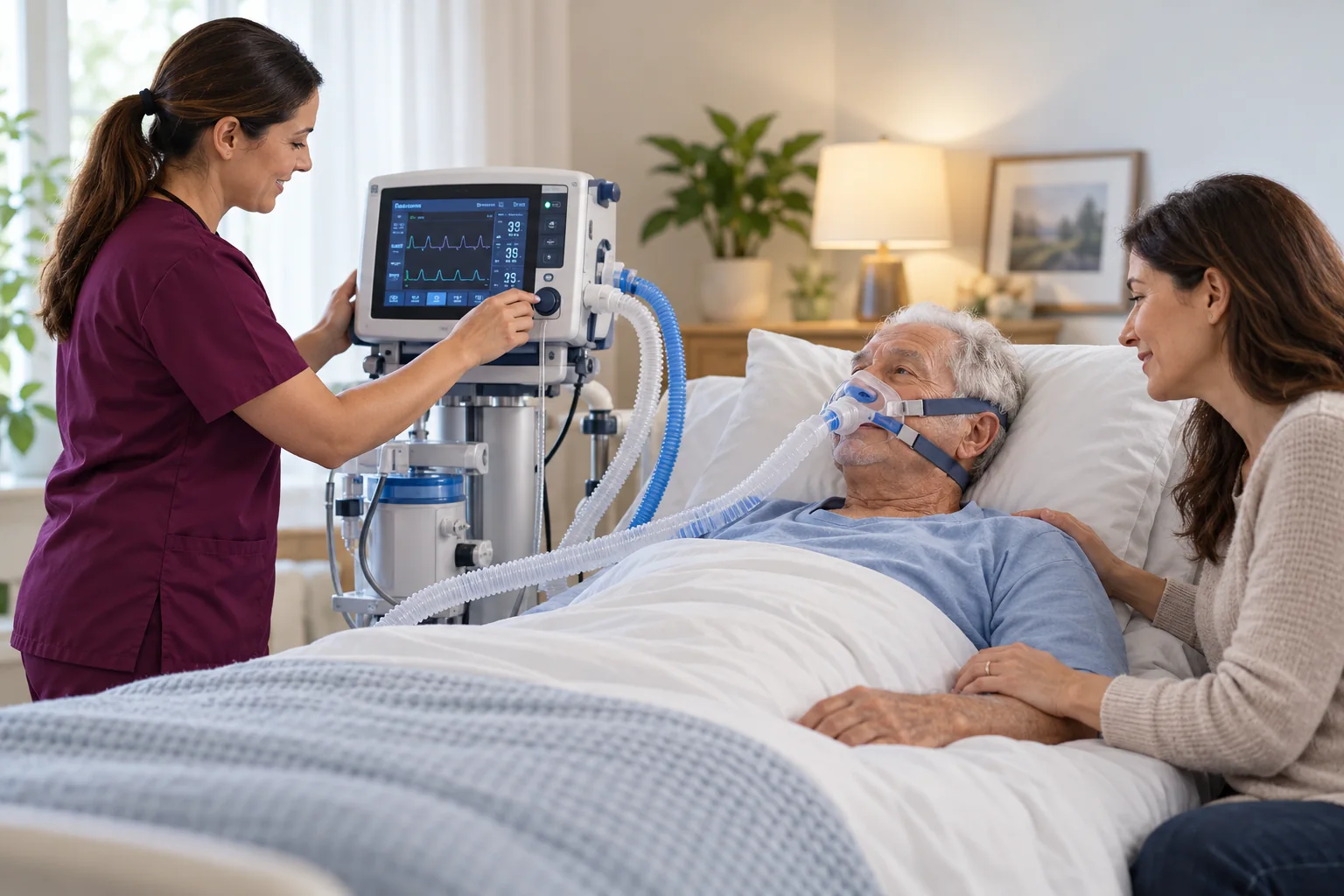
Nurse supporting a patient using home ventilation equipment – Revive Rise
Support begins with the person's prescribed respiratory care requirements and home environment.
Understanding home ventilation

Ventilator care at home.
Built around safety and daily life.

Home ventilation support is tailored to people who use assisted breathing equipment as part of a clinician-prescribed plan. Needs can differ between invasive and non-invasive ventilation, and the required level of observation or hands-on support varies significantly.

Before care begins, nurse-led planning considers respiratory observations, ventilator equipment, communication, medication instructions, personal care and emergency procedures. We work alongside the responsible respiratory and medical professionals rather than replacing their treatment decisions.

✓Individual care instructions and clinical assessment
✓Appropriate training, competency and escalation planning
✓Daily routines, dignity and personal goals included
Support we may provide

What Specialist Ventilator Care at Home Can Include

Care is not one-size-fits-all. The following areas describe potential components of an agreed package, not services automatically suitable for every person.

01

Respiratory and ventilator observations

Agreed observations and reporting of changes in breathing, comfort or equipment performance.

02

Ventilation equipment support

Care tasks around prescribed devices, interfaces and circuits where the team has appropriate training.

03

Airway and secretion management

Individually assessed airway-care activities, with clear clinical instructions and escalation plans.

04

Non-invasive ventilation routines

Support with prescribed mask-based ventilation arrangements where appropriate and agreed.

05

Tracheostomy and invasive ventilation

For people needing this combination, the care plan must address airway tasks and competency requirements.

06

Medication and treatment coordination

Following the person's authorised medication and respiratory-treatment instructions.

07

Night-time routines and comfort

Planned assistance with rest, positioning and monitoring appropriate to the assessed care package.

08

Daily living and communication

Support for personal care, choices and routines alongside respiratory equipment needs.

09

Family communication and review

Clear care records, involvement with consent, and updates when needs or risks change.

Who this support may help

Clinical safety and independence can work together

People living with complex respiratory conditions may need specialist support during the day, at night or around particular routines. An acquired neurological condition, spinal injury or another long-term health need may affect breathing support, but suitability for care at home cannot be assumed from a diagnosis alone.

Our aim is to coordinate compassionate care at home with existing clinical guidance, while recognising the individual's abilities, family involvement and preferences.

Appropriate care settingThe home environment, equipment and risk controls are assessed before any package is agreed.
Competent staffStaff must have the training and verified competencies required for their specific tasks.
Joined-up workingInformation-sharing with specialists and family members where appropriate and consented.
A clear care pathway

From Enquiry to a Safe Home Ventilation Care Plan

A structured approach to assessment, staff readiness and review helps families understand what support may be practical.

01

Initial conversation

We discuss the person's needs, prescribed equipment, existing care team and day-to-day priorities.

02

Nurse-led assessment

The clinical and practical requirements, risks, home environment and staff competencies are reviewed.

03

Care planning and readiness

A proposed package sets out agreed tasks, communication, emergency arrangements and staff responsibilities.

04

Care delivery and review

Where suitable staff are available and the plan is safe, care can begin with ongoing oversight and reassessment.

Planning specialist support

Exploring Specialist Ventilator Care at Home

Our nurse-led team can discuss home ventilator support based on prescribed respiratory requirements, equipment, individual routines and the home environment. Availability depends on clinical assessment and suitably trained staff.

Respiratory assessmentNurse-led planningEquipment readinessFamily coordinationClinical safetyOngoing review

Our care planning includes ventilator care at home, nurse-led ventilator care, home ventilation support, specialist ventilator care and ventilator nursing care at home. These descriptions refer to individually assessed care arrangements, not guaranteed availability or a standard package.

Care packages depend on individual clinical suitability, safe staffing arrangements and current availability.
Personalised respiratory care

Let's Discuss Your Home Ventilator Support Needs

Tell us about prescribed breathing support, planned discharge, personal routines and any existing clinical advice. We can explain whether a nurse-led assessment would be appropriate.

Request an Assessment ↗No-obligation initial discussion
Responsible clinical information

Clinical Guidance and Care Standards

The responsible respiratory team remains the source of decisions about ventilation modes, equipment settings and treatment. Read more at NHS home oxygen treatment information (which is distinct from mechanical ventilation) or check care-provider registration through the Care Quality Commission. In an emergency involving severe breathing difficulty, call 999.

Contact Revive Rise

Let's talk about your care needs.

Tell us about the ventilator support you are looking for. We'll discuss clinical assessment, care requirements and suitable next steps.

Call our team0333 004 9953
Out-of-hours number07508 031542
Care assessmentIndividual respiratory needs and staffing arrangements reviewed before a package is agreed

Request a consultation

Share a few details and our care team will discuss suitable next steps with you. Please avoid including sensitive medical information.

Frequently Asked Questions

Ventilator Care at Home FAQs

Practical answers about assessments, respiratory support and safely planned care at home.

What is ventilator care at home?

It is an assessed care arrangement for someone using clinically prescribed assisted ventilation at home. Support varies according to the person's needs, equipment and clinical instructions.

Who may be suitable for home ventilator support?

Suitability requires consideration of clinical stability, respiratory requirements, equipment, the home environment, staffing and safe escalation arrangements.

Can Revive Rise support invasive and non-invasive ventilation?

A nurse-led assessment can consider either type. Specific tasks are offered only if they fall within the agreed care plan and appropriately trained staff are available.

Is ventilator care different from tracheostomy care?

Yes. Ventilation helps breathing, whereas a tracheostomy is an opening into the windpipe. Some people may need both, but not everyone receiving ventilator care has a tracheostomy.

Can ventilator support at home follow hospital discharge?

Potentially, where a suitable discharge plan, equipment, staff competencies and coordination with the hospital respiratory team are in place.

What does a nurse-led assessment cover?

The assessment considers prescribed care tasks, respiratory risks, the home setting, communication, personal routines, staff competencies and emergency arrangements.

Will staff change ventilator settings or oxygen prescriptions?

Ventilator settings and prescribed oxygen treatment must be managed in accordance with the responsible clinician's instructions. Home care staff do not independently make specialist treatment decisions.

Can families take part in care planning?

With the individual's consent, family members can share preferences, routines and relevant observations, and agree on communication arrangements.

How are ventilator care plans reviewed?

Reviews are based on individual needs and should be brought forward whenever symptoms, clinical instructions, equipment or the support environment changes.

How do we enquire about ventilator care?

Call Revive Rise on 0333 004 9953 or complete the enquiry form. The team can explain assessment steps and whether suitable support may be available.