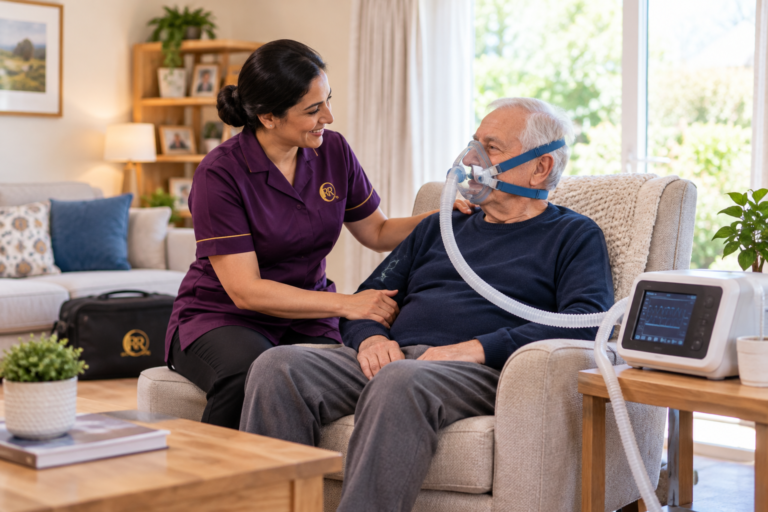

Many families wonder whether an older relative or an adult with additional healthcare needs can continue living at home instead of moving into residential care. In many circumstances, specialist care at home in Tamworth can support safety, dignity and independence. This guide explains who may benefit, what care can involve and how families can assess the right arrangements.
Can specialist care really be delivered at home?
Yes. Many older people and adults who need additional support can receive specialist care in their own homes in Tamworth, provided an assessment confirms that their needs can be met safely. Care at home may include personal assistance, clinical procedures, monitoring, rehabilitation-related support and help with long-term conditions. The right arrangement depends on the person’s health, preferences, home environment and access to suitable staff and equipment. Home care is not automatically appropriate in every situation, but it can be a practical alternative to moving into a residential setting.
What does specialist home care mean?
Specialist home care goes beyond routine help with meals, dressing and companionship when an individual has more demanding healthcare requirements. It may involve an NMC-registered nurse assessing needs, developing a clinical care plan, supervising trained staff and coordinating with other professionals. Some tasks must be performed by suitably qualified clinicians, while others may be delegated to competent care workers under appropriate oversight. Families should ask exactly which services are included and who is responsible for each task.
Who may benefit from specialist support?
Older adults living with multiple long-term conditions, people recovering from serious illness, adults with physical disabilities and individuals with acquired brain injuries may all benefit from a specialist assessment. People living with dementia, spinal cord injuries or complex neurological conditions may also need tailored care. The term ‘vulnerable adult’ is broad and does not determine a person’s abilities or choices. Care should reflect each individual’s circumstances, rights, capacity, preferences and support network rather than assumptions based on age or diagnosis.
Which specialist services might be available at home?
Depending on the provider’s competencies and the individual assessment, home-based support may include catheter and stoma care, enteral feeding, tracheostomy or ventilator-related support, mobility and positioning assistance, pressure-area prevention, personal care, and support with complex medication routines. Some people also need coordinated end-of-life care or dementia-related support. Not every provider delivers every intervention. Clinical procedures, staffing arrangements and emergency protocols must be agreed before care begins.
How does nurse-led care improve coordination?
Registered nurses can assess clinical risks, contribute to personalised care plans, monitor changes and check that staff have the right skills for assigned tasks. Nurse-led care also helps establish communication with GPs, community nurses, therapists and other healthcare professionals. It does not necessarily mean a nurse is present for every visit. Families should confirm the frequency of nursing reviews, how urgent advice is obtained and which procedures require direct nursing involvement.
What are the benefits of remaining at home?
For some people, familiar surroundings support comfort, independence and continuity of daily routines. Being at home can make it easier to maintain relationships, preferred mealtimes, hobbies and personal choices. Families may also find it easier to participate in care planning and stay informed. These benefits should be balanced against practical considerations such as safe moving and handling, accessibility, specialist equipment and the availability of appropriate support throughout the required hours.
How is safety assessed before care starts?
A detailed assessment should consider the person’s medical needs, mobility, skin integrity, nutrition, communication, cognition, medications, infection risks and emergency requirements. The provider may also review access to the home, equipment, space for care tasks and any risks to the person or staff. Where specialist interventions are involved, the plan should explain staff competencies, equipment checks, escalation steps and arrangements if a regular worker is unavailable. The individual and their family or representative should be involved as appropriate.
What about dementia and decision-making?
People living with dementia should be supported to make their own decisions wherever possible. Communication methods, routines and preferences should be central to the care plan. Where there are concerns about a person’s capacity to make a particular decision, the Mental Capacity Act framework applies in England. Capacity is decision-specific, and support should be provided before concluding that someone cannot decide. Any decisions made on a person’s behalf must follow the relevant legal requirements and respect their rights.
Can care needs change over time?
Yes. A person who initially needs a few daily visits may later require specialist nursing input, additional equipment or longer periods of support. Changes such as repeated falls, new swallowing difficulties, worsening mobility, pressure damage or increased clinical requirements should prompt a reassessment. A good provider reviews the plan and discusses whether it can continue to meet the person’s needs safely. Families should not wait for a crisis before reporting significant changes.
How much does specialist home care cost?
Costs depend on the type of care, duration, staffing, clinical complexity and any specialist arrangements. Families should request a personalised written quotation and ask what is included. Depending on assessed needs and eligibility, support may be available through the local authority or NHS Continuing Healthcare. The NHS social care and support guide explains assessment and funding routes. Funding should never be assumed before eligibility has been established.
How should families choose a provider in Tamworth?
Check whether the provider is registered with the Care Quality Commission for the regulated activities it offers. Ask about experience with the person’s condition, staff training, nursing oversight, safeguarding, continuity, emergency cover and review arrangements. The Care Quality Commission provides information about registered providers and inspection findings. Request a clear care plan and make sure the individual receiving care is included in discussions as far as possible.
How Revive Rise can support families
Revive Rise is a CQC-regulated, nurse-led domiciliary care provider based in Tamworth. Families can discuss specialist requirements, daily support needs and possible care arrangements with the team. Learn more about Revive Rise services, complex care support, home care in Tamworth and qualifications to look for in a home care nurse. An individual assessment helps establish what is safe, suitable and available.
Explore Specialist Home Care in Tamworth With Revive Rise
If an older family member or an adult with additional needs requires support at home, Revive Rise can discuss personalised care options, clinical requirements and the assessment process. Share the person’s needs and preferred arrangements with our nurse-led team to explore whether a suitable care package can be developed. Individual services and availability are subject to assessment and confirmation.
Frequently Asked Questions
Can an elderly person receive complex care without moving into a care home?
Yes, where an individual assessment confirms that appropriate clinical and daily support can be provided safely at home.
Is specialist home care suitable for adults with disabilities?
It can be. Support should reflect the person’s individual goals, abilities, health needs and preferences.
Can someone with dementia receive specialist care at home?
Yes, depending on their needs, safety considerations and the provider’s ability to offer suitable support.
Does a nurse need to attend every home care visit?
Not always. The staffing model depends on the person’s needs and which tasks require registered nursing involvement.
Can tracheostomy care be provided at home?
It may be possible with appropriate assessment, equipment, competent staff and a clear emergency plan.
What if a person’s needs increase?
The care plan should be reassessed and staffing, equipment or clinical input adjusted where appropriate.
Is home care available after hospital discharge?
Home care may form part of a discharge plan when the required support can be arranged safely.
How can families check whether a provider is regulated?
Search the provider’s details on the Care Quality Commission website and review the activities for which it is registered.
Is financial assistance available?
Some people may qualify for local authority support or NHS Continuing Healthcare following assessment.
How can we discuss specialist care with Revive Rise?
Contact the team with details of the person’s needs, location and preferred arrangements to discuss assessment and next steps.