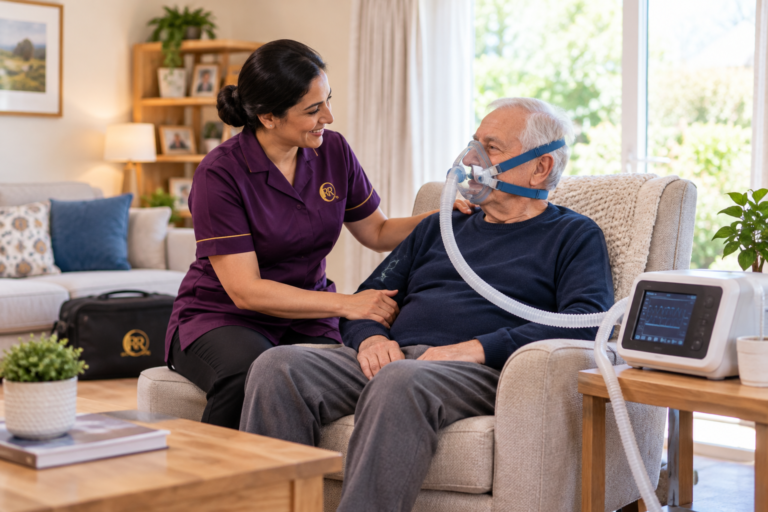

Families managing serious or long-term health conditions often ask whether hospital-level needs can be supported safely at home. Complex medical care at home in Tamworth can be an option for some people, but safety depends on careful assessment, qualified staff, reliable equipment and a clear clinical plan. This guide explains what families should expect before choosing a home-based care arrangement.
Can complex medical care be safely delivered at home?
Yes. Some people with significant clinical needs can receive complex medical care at home in Tamworth when a thorough assessment confirms that the environment, staffing, equipment and care plan are appropriate. Safe delivery depends on the particular condition and intervention; it is not a guarantee that every treatment can be provided outside hospital. Registered nurses, specialist clinicians, trained support workers and family members may have different roles within an agreed plan. The aim is to combine clinical safety with dignity, choice and a familiar daily routine.
What counts as complex medical care?
Complex medical care usually refers to support that requires more advanced clinical knowledge, ongoing monitoring or specialist procedures than standard personal care. Examples can include tracheostomy care, assisted ventilation, enteral feeding, complex catheter or stoma care, spinal injury support and care for people with neurological conditions. Some people need several interventions together, while others require close observation because their condition may change quickly. The level of complexity should be determined through assessment rather than a label alone.
Who might benefit from care at home?
People living with long-term neurological conditions, acquired brain injuries, spinal cord injuries, significant physical disabilities or multiple health conditions may be considered for home-based clinical support. Others may require specialist assistance after a prolonged hospital admission. For some individuals, remaining at home supports familiar routines, contact with family and participation in decisions. However, a person’s preferences must be balanced with realistic assessments of risks, staffing and available clinical services.
Why is a nurse-led assessment important?
Before care begins, a qualified professional should establish the person’s clinical requirements, communication needs, mobility, nutrition, medicines, skin care, equipment and emergency risks. A nurse-led assessment can help identify which interventions require a registered nurse and which may be safely delegated to appropriately trained staff. It should also consider the person’s wishes and any existing input from hospital specialists, community nursing teams, GPs and therapists. Assessment is an ongoing process, not a one-off form.
How are clinical risks managed at home?
A safe plan should identify foreseeable risks and the actions needed to reduce them. This may involve written procedures for equipment checks, infection prevention, pressure-area care, medicines, safe moving and handling, and recognising deterioration. Each task needs clear responsibility and escalation instructions. Where a person relies on essential medical equipment, the plan should address maintenance, supplies and what happens if equipment fails. Families should know who to contact during normal hours and in an urgent situation.
Can tracheostomy and ventilator support be provided at home?
For some people, yes, with specialist assessment and a properly prepared care arrangement. Airway and ventilation-related support can involve substantial risks, so staff must be trained and assessed as competent for the person’s specific equipment and procedures. Care plans should include emergency response arrangements, equipment checks, relevant supplies and links to the treating clinical team. A provider should never promise that an individual can be supported at home until the required safeguards have been confirmed.
What role do trained care workers play?
Registered nurses do not necessarily need to perform every task in a complex care package. Depending on the intervention and the person’s condition, some care may be delegated to trained and competent support workers. Delegation requires appropriate assessment, clear instructions, supervision and review. The nurse remains professionally accountable for their decision to delegate, while the worker is responsible for carrying out tasks within their competence. Families should ask which activities are nurse-delivered and which are delegated.
How does the home environment affect safety?
Home-based clinical care needs a suitable physical environment. The team may need to assess accessibility, space for equipment, electrical supply, storage, infection prevention arrangements and safe access for carers. Where mobility is limited, hoists, profiling beds or other aids may be needed following professional advice. It is also important to consider privacy, comfort and how care will fit around the household. Practical changes should be discussed before discharge or the start of a new package.
How are emergencies and changes in condition handled?
An individual care plan should explain warning signs that require attention, whom to contact and when emergency services are needed. Staff need to understand their own role and the limits of the support available. Plans may include arrangements for unplanned staff absence, equipment problems and communication with clinicians. If the person’s condition changes significantly, the provider should reassess whether the current staffing and care arrangements remain safe. Home care is not a substitute for emergency hospital treatment when it is needed.
What happens when someone leaves hospital?
Discharge planning is especially important when complex interventions are involved. Hospital and community teams may need to coordinate clinical handover, medicines, equipment, training and follow-up appointments. Families should ask whether the proposed home care provider has reviewed the discharge information and confirmed competency for required tasks. A rushed discharge without the necessary support in place can create avoidable risks. Where arrangements are incomplete, concerns should be raised with the discharge team before the move home.
How can families assess a provider’s quality?
Ask whether the provider is registered for relevant regulated activities with the Care Quality Commission, and check its published information. Find out how nurses are registered, how staff competencies are assessed, how care plans are reviewed and what arrangements exist for clinical advice. Request clear explanations about continuity, safeguarding, incident reporting and emergency escalation. The NMC register can help verify an individual nurse’s registration. A provider should be open about what it can and cannot safely deliver.
What about costs and funding?
The cost of complex care at home varies with the level of clinical support, number of care hours, staffing requirements and equipment arrangements. Some individuals may be eligible for NHS Continuing Healthcare or other assessed support, but eligibility is not automatic. Families should ask for a written breakdown of proposed services and clarify which organisations are responsible for funding, equipment and clinical supplies. Decisions about care should be based on both assessed needs and a sustainable, safe arrangement.
How Revive Rise approaches complex home care in Tamworth
Revive Rise is a CQC-regulated, nurse-led domiciliary care provider based in Tamworth. Its team can discuss a person’s needs, the assessment process and whether an appropriate care arrangement may be possible. Explore complex care services, home care services, home care in Tamworth and our guide to home care nurse qualifications. Every arrangement should be based on the person’s assessed clinical needs, preferences and the availability of suitably competent staff.
Discuss Safe Complex Home Care in Tamworth
If someone you care for has specialist medical needs, Revive Rise can discuss the circumstances and explain the next steps towards an individual assessment. Our nurse-led approach focuses on appropriate clinical oversight, personalised planning and communication with families. Contact the team to explore whether suitable support can be arranged; specific services and availability must be confirmed following assessment.
Frequently Asked Questions
Is complex medical care at home safe for everyone?
No. Safety depends on the person’s needs, clinical stability, equipment, home environment and access to suitably trained staff.
Can someone with a tracheostomy receive care at home?
In some cases, yes, after specialist assessment and with competent staff, suitable equipment and an emergency plan.
Can ventilator care be managed outside hospital?
It may be possible for selected individuals with appropriate clinical oversight, training, equipment and contingency planning.
Does a registered nurse need to attend every visit?
Not necessarily. Staffing depends on assessed needs and whether particular tasks can be safely delegated.
How is staff competence checked?
Providers should use role-specific training, practical competency assessments, supervision and periodic review.
What should a complex care plan include?
It should cover clinical needs, individual preferences, daily tasks, responsibilities, risk controls and emergency escalation.
Can complex care start immediately after hospital discharge?
Only when essential assessments, staff, equipment, handovers and other safe discharge arrangements are in place.
What happens if medical equipment stops working?
The care plan should include equipment-specific contingency steps and escalation to appropriate clinical or emergency services.
Can families help with the care plan?
Yes. With the person’s consent and preferences respected, family input can help ensure practical, person-centred arrangements.
How do I discuss complex home care with Revive Rise?
Contact the team to explain the person’s needs and ask about assessment, staffing and available support.