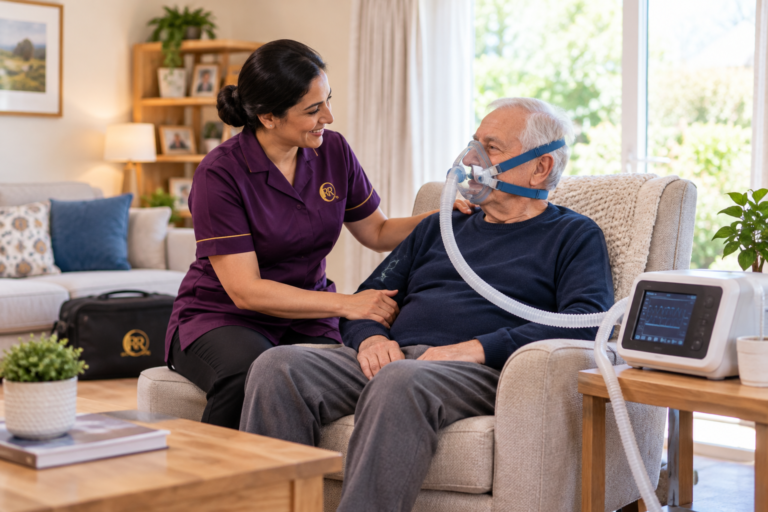

Arranging support at home can feel unfamiliar, particularly when a relative’s needs have changed after illness or a hospital stay. A nurse-led home care assessment helps families explain everyday routines, clinical concerns and personal preferences before a care package is agreed. This guide outlines what to prepare, what questions to ask and how to make the assessment useful for everyone involved in Tamworth.
What Is a Nurse-Led Home Care Assessment?
A home care assessment is a structured conversation about what a person needs to remain safe, comfortable and as independent as possible at home. It may include an assessment of daily routines, mobility, medication support, communication, personal care, nutrition, existing health conditions and risks within the home. In a nurse-led service, a registered nurse can also consider clinical requirements, professional responsibilities and whether specialist support or further input from the wider healthcare team is needed. An assessment is not a test that families must pass. It is an opportunity to explain what matters to the person receiving care and to establish what can realistically be provided.
Why Is Preparation Helpful?
Care arrangements work better when professionals understand the whole picture rather than a list of diagnoses. A family member might know that mornings are difficult, that a particular routine reduces distress, or that stairs have recently become harder to manage. Sharing this information early helps identify suitable visit times, skills, equipment, communication approaches and escalation arrangements. Preparation also gives the person receiving care more opportunity to express their preferences. Families do not need to gather perfect records: even brief notes about the main concerns and priorities can make the conversation more productive.
What Information Should Families Gather?
Begin with a simple summary of the person’s current circumstances. Note the conditions that affect daily living, any recent hospital admissions, who currently provides support and the tasks that have become challenging. Have an up-to-date medication list available if possible, including allergies and who currently administers or prompts medicines. Record the contact details of the GP, community nursing team and relevant specialists. If there are discharge instructions or existing care plans, keep them nearby. The assessing nurse can clarify what is useful and what requires confirmation from the responsible clinician.
How Should You Describe a Typical Day?
Walk through a normal day from waking to bedtime. Explain what the person can manage independently, what takes extra time and what requires hands-on assistance. Include washing, dressing, using the toilet, meals, hydration, moving around the home, social activities and settling at night. Mention whether needs vary from day to day. Someone may manage well in the morning but become fatigued by the afternoon. Describe both good days and difficult days so the proposed care package reflects the range of support needed rather than a single snapshot.
What Should Be Discussed About Mobility and Home Safety?
The assessment should consider how the person gets in and out of bed, stands, transfers, walks or uses mobility equipment. Explain any falls, near misses, dizziness or pain that affect movement. It is useful to point out narrow doorways, steps, loose rugs, inaccessible bathrooms or areas where equipment is stored. Do not attempt unsafe transfers simply to demonstrate what someone can do. Where moving and handling risks are identified, a suitable assessment, equipment and trained staff may be required before care begins. Adaptations and occupational therapy input may also be relevant.
How Are Clinical and Specialist Care Needs Considered?
Some people need more than help with everyday activities. They may require support associated with complex health conditions, enteral feeding, catheter care, respiratory equipment or other specialist procedures. Families should describe existing clinical routines and provide any written plans, training records or instructions from the responsible healthcare professionals. A nurse-led provider should establish which tasks are appropriate for its team, what competencies and supervision are needed, and how changes or emergencies will be escalated. Care workers should not be expected to perform unfamiliar clinical tasks without suitable assessment, training and authorisation.
How Can the Person Receiving Care Stay Involved?
Where possible, arrange the assessment at a time when the person feels comfortable and alert. Ask whether they would like a relative, friend or advocate present. Explain the purpose of the meeting in clear language and give them time to answer. Their preferences about privacy, dignity, cultural practices, routines and personal goals should guide the discussion. If communication is difficult, the assessor can explore appropriate aids and ways of presenting information. Where there are questions about capacity for a particular decision, professionals must follow the relevant legal framework rather than assuming that a diagnosis removes a person’s right to participate.
What Questions Should You Ask the Care Provider?
Ask who will lead the assessment, who will create and review the care plan, and what experience the team has with the person’s needs. Clarify whether support is delivered through scheduled visits, extended shifts or another arrangement. Discuss how continuity of carers is managed, how staff are trained, who to contact outside office hours and what happens if needs change. Ask how incidents, safeguarding concerns and complaints are handled. It is also reasonable to request a clear explanation of fees, what is included, and whether a proposed start date depends on equipment, staffing or clinical handover.
What Happens After the Assessment?
The provider should explain its findings and whether it can safely meet the identified needs. If care is appropriate, the next steps may include agreeing goals, developing an individual care plan, arranging risk assessments, confirming staff competencies, setting up equipment and coordinating with clinicians or family carers. Ask when the plan will be reviewed and what would trigger an earlier reassessment. Needs can change following illness, hospital discharge or changes in mobility, so the plan should not be treated as a one-time document. Keep a copy of agreed arrangements and a practical contact route for questions.
How Can Families Avoid Common Assessment Mistakes?
Avoid minimising difficulties out of embarrassment or describing only the most manageable days. Be open about night-time support, continence concerns, missed medication, caregiver fatigue and any worries about safety. Equally, highlight what the person still enjoys and can do independently: good care aims to support ability, not replace it unnecessarily. Do not assume every service can deliver every specialist procedure. Confirm what will actually be provided, by whom and under what clinical oversight. Finally, involve the person receiving care wherever possible and allow time to consider the proposed plan before agreeing.
Where Can Families Find Trusted Guidance?
For information about what people should expect from regulated adult social care services, see the Care Quality Commission guidance on good care. Families can also read the NHS social care and support guide for an overview of care options, assessments and support for carers.
How Revive Rise Supports Families in Tamworth
Revive Rise is a CQC-regulated, nurse-led home care provider based in Tamworth, supporting people with personalised care across the West Midlands. NMC-registered nurses provide clinical oversight of appropriate care packages, with attention to dignity, individual preferences, staff competencies and ongoing review. Families can discuss everyday home support as well as more specialist needs, subject to an individual assessment and a safe, agreed care plan.
Arrange a Conversation About Home Care in Tamworth
Tell our team what support your family is looking for. We can explain the assessment process, discuss your concerns and explore suitable next steps without obligation.
Frequently Asked Questions
Do I need medical records before a home care assessment?
No. Existing care plans, discharge notes and medication lists can help, but the provider can explain what information is essential.
Can a family member attend the assessment?
Usually, with the consent of the person receiving care. A trusted relative or advocate may help communicate routines and preferences.
Does a nurse-led assessment guarantee that care can start immediately?
No. The provider must confirm that the proposed support can be delivered safely, with suitable staff, equipment and any necessary clinical handover.
Will the person receiving care be involved in decisions?
They should be involved as much as possible, with communication and decision-making support appropriate to their circumstances.
Can the care plan change after services begin?
Yes. Care plans should be reviewed and adjusted when needs, preferences or risks change.
What if the person has specialist medical needs?
Describe those needs clearly and provide existing clinical instructions. The provider should assess competencies, supervision and coordination with relevant clinicians.
Should we mention difficulties that happen only at night?
Yes. Night-time needs, falls risk and changes in condition may affect the type and timing of support.
Can the assessment include home safety concerns?
Yes. Mobility, transfers, equipment and environmental risks should be discussed, with specialist input arranged where needed.
Is a home care assessment the same as a council needs assessment?
No. A provider assessment informs its own care arrangements; a local authority needs assessment considers eligible care and support needs under the applicable framework.
What should we do if needs change suddenly?
Contact the care provider and relevant healthcare professionals promptly. In an emergency, use emergency services rather than waiting for a routine review.