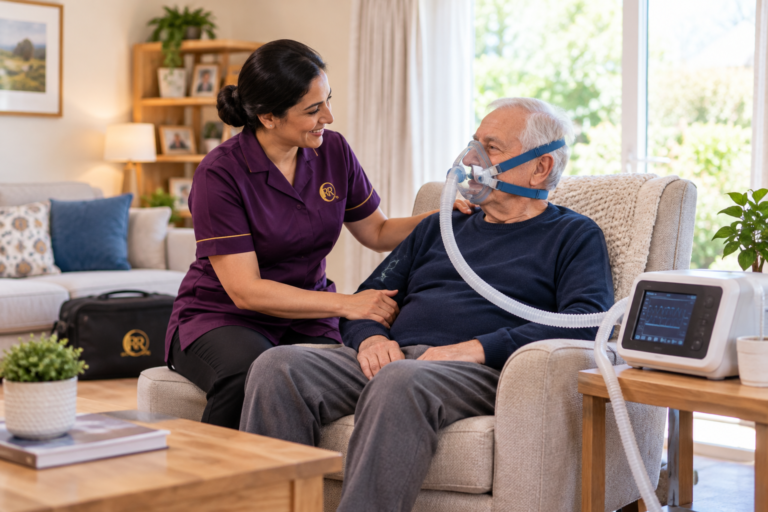

When someone needs a ventilator at home, families often have two questions: how can everyday care feel normal, and what happens if something unexpected occurs? A clear home ventilator safety plan helps answer both. It sets out the person’s respiratory needs, who provides care, equipment arrangements and actions agreed with the specialist clinical team.
Home ventilation can support people with different conditions, and not everyone uses the same device or needs the same assistance. This guide focuses on planning and family awareness, not instructions for operating a ventilator. Settings, clinical procedures and emergency responses must always follow the individual’s prescribed plan.
What Is a Home Ventilator Safety Plan?
A home ventilator safety plan is a person-specific document describing how respiratory support will be provided, monitored and reviewed outside hospital. It should be prepared with the treating ventilation service, the person receiving care, their family where appropriate, and professionals responsible for home support.
Some people use non-invasive ventilation through a mask while sleeping; others need support for longer periods or ventilation through a tracheostomy. These situations involve different risks. Guidance for one type of ventilation should not automatically be applied to another.
The Leeds Teaching Hospitals NHS Trust home ventilation guidance explains routine support, equipment care and preparation for unexpected interruptions.
What Should the Plan Include Before Care Starts?
Useful plans bring clinical information and household arrangements together. Families should be able to find essential details quickly without searching through several documents.
Core information to confirm with the clinical team:
- The person’s diagnosis, communication preferences and care goals
- The prescribed ventilation type and when it is required
- Who is authorised and competent to support equipment
- Approved monitoring, observations and documentation
- Recognised warning signs specific to the person
- Named clinical contacts and out-of-hours arrangements
- What alarms mean under device-specific training
- Backup equipment and power arrangements, if prescribed
- Maintenance, servicing and replacement responsibilities
- Equipment and consumable storage arrangements
- A written emergency and escalation pathway
- When the plan will be reviewed and updated
Families do not need to become respiratory specialists to contribute. Their knowledge of routines, comfort, communication and preferences can improve the plan. Clinical decisions should remain with appropriately qualified professionals.
How Should Families Prepare for Power Cuts or Equipment Problems?
Loss of power, a damaged component or an unexpected alarm can be concerning when breathing support is essential. The correct response depends on the person’s dependence on ventilation, the device in use and the arrangements prescribed by their respiratory team.
Power interruptions
Confirm whether the equipment has a battery, what backup arrangements are prescribed, who checks readiness and what the household should do during an outage. The specialist team should clarify any requirements for alternative power or equipment.
Device alarms
Trained carers need the machine’s alarm guidance and escalation contacts. Alarms should not be ignored or silenced without an appropriate assessment. Keep relevant telephone numbers accessible to the care team.
Equipment failure
Record the provider’s fault-reporting number, replacement arrangements and clinical escalation route. Do not attempt unauthorised repairs. The need for a backup machine must be assessed individually.
Changes in breathing
Document individual warning signs and the agreed response. Sudden severe breathing difficulty or other life-threatening deterioration requires emergency help.
The Hull University Teaching Hospitals NHS Trust guidance for non-invasive ventilation carers discusses device-specific training, troubleshooting and specialist support. Its advice does not replace an individual emergency plan.
What Should Be Checked in the Home Environment?
A safe arrangement includes more than the ventilator. Before discharge, professionals should assess where equipment will be used, access to power, storage for supplies and whether staff can work safely around the bed or chair.
Families can identify practical challenges: narrow access routes, pets, children, moving between rooms, night-time routines and communication needs. Equipment should remain accessible without making the home unnecessarily clinical.
Where additional medical needs are present, planning may involve coordinated complex care support. Mobility, nutrition, personal care and medication routines may need to fit around prescribed ventilation.
Who Is Responsible for Training and Clinical Oversight?
The specialist ventilation team should establish clinical requirements and explain equipment, monitoring and escalation arrangements. Home-care professionals performing delegated tasks need relevant training, competency assessment and supervision appropriate to those tasks.
A written plan should identify who checks equipment, records observations, reviews concerns and approves changes. It should distinguish relatives’ responsibilities from those of paid carers. Family members may choose to help but should not be assumed competent in specialist procedures without training.
Families considering nurse-led ventilator care at home can ask how the provider works with respiratory specialists, assesses staff competence and responds when needs change.
How Does Hospital Discharge Planning Affect Ventilator Safety?
Moving from hospital to home needs coordination. Ideally, the treating team and home-care provider agree on clinical responsibilities, equipment, training, supplies, prescriptions, transport arrangements and the first review before discharge.
Families should know who to contact if a delivery is delayed, a trained carer is unavailable or the person’s condition changes. Verbal reassurance is not a substitute for a documented contingency plan. The provider’s hospital discharge support may be relevant when arranging a coordinated return home.
After discharge, the care plan should be reviewed whenever health, equipment, prescribed treatment or staffing changes significantly. Reviews also help address practical concerns raised by the person and family.
How Can Safety Planning Support Independence?
Planning is not simply about preventing problems. It can help people spend time with family, follow familiar routines and make choices. The person’s preferences should guide care wherever clinically appropriate.
A care plan may describe preferred sleeping arrangements, how someone signals discomfort, how they communicate when wearing a mask and which activities matter most. These details support dignity alongside respiratory needs.
Families can explore local options through Revive Rise’s home care in Tamworth page.
What Questions Should Families Ask Before Agreeing to a Care Package?
Ask who prepared the ventilation plan, how it will be shared and when it will be updated. Confirm how staff competence is assessed, whether backup arrangements reflect clinical dependence and who coordinates with the hospital respiratory service.
Also ask how staff absences are covered, who responds to out-of-hours clinical concerns and how relatives can report changes. Answers should be specific to the person rather than a general description of a provider’s services.
Nurse-Led Home Ventilator Support With Revive Rise
Revive Rise provides CQC-regulated, nurse-led home care for people with complex health needs in Tamworth and across the West Midlands. Its approach involves NMC-registered nursing oversight and care planned around individual assessments, clinical requirements and personal goals.
Where ventilator support is needed, the package should be agreed with the treating clinical team. Revive Rise can discuss how specialist staffing, clinical supervision and everyday support may fit into a coordinated plan.
Discuss a Home Ventilator Care Plan in Tamworth
Preparing for ventilator support at home? Speak with Revive Rise about assessed needs, staffing requirements and how a safe, personalised care arrangement could be organised alongside the respiratory team.
Frequently Asked Questions
What is the main purpose of a home ventilator safety plan?
It explains prescribed respiratory support, responsibilities, monitoring, equipment arrangements and emergency escalation. It should be individualised and approved by the relevant clinical team.
Does everyone using home ventilation need a backup machine?
Not necessarily. Backup requirements depend on clinical dependence, device type and specialist assessment. Families should ask for a documented decision and appropriate contingency arrangements.
Can family members manage ventilator alarms?
Family members may learn agreed tasks, but should not be expected to interpret or manage alarms without suitable training. Responses must follow device-specific instructions and the person’s escalation plan.
Who should review a home ventilator care plan?
The responsible respiratory or clinical team should determine review arrangements, with input from the person, carers and home-care professionals. Changes in health, equipment or support may require earlier review.
What if breathing suddenly becomes much worse?
Follow the individual’s emergency plan and seek urgent help. For severe breathing difficulty, unresponsiveness or another life-threatening emergency, call 999. Do not adjust treatment beyond your training.